My role
UX Designer (end-to-end)
UX Designer (end-to-end)
Duration
6 weeks (design phase)
6 weeks (design phase)
Project type
Community (Passion) Project
Designing for Focus Under Pressure
Designing for Focus Under Pressure
Context
The Human Element
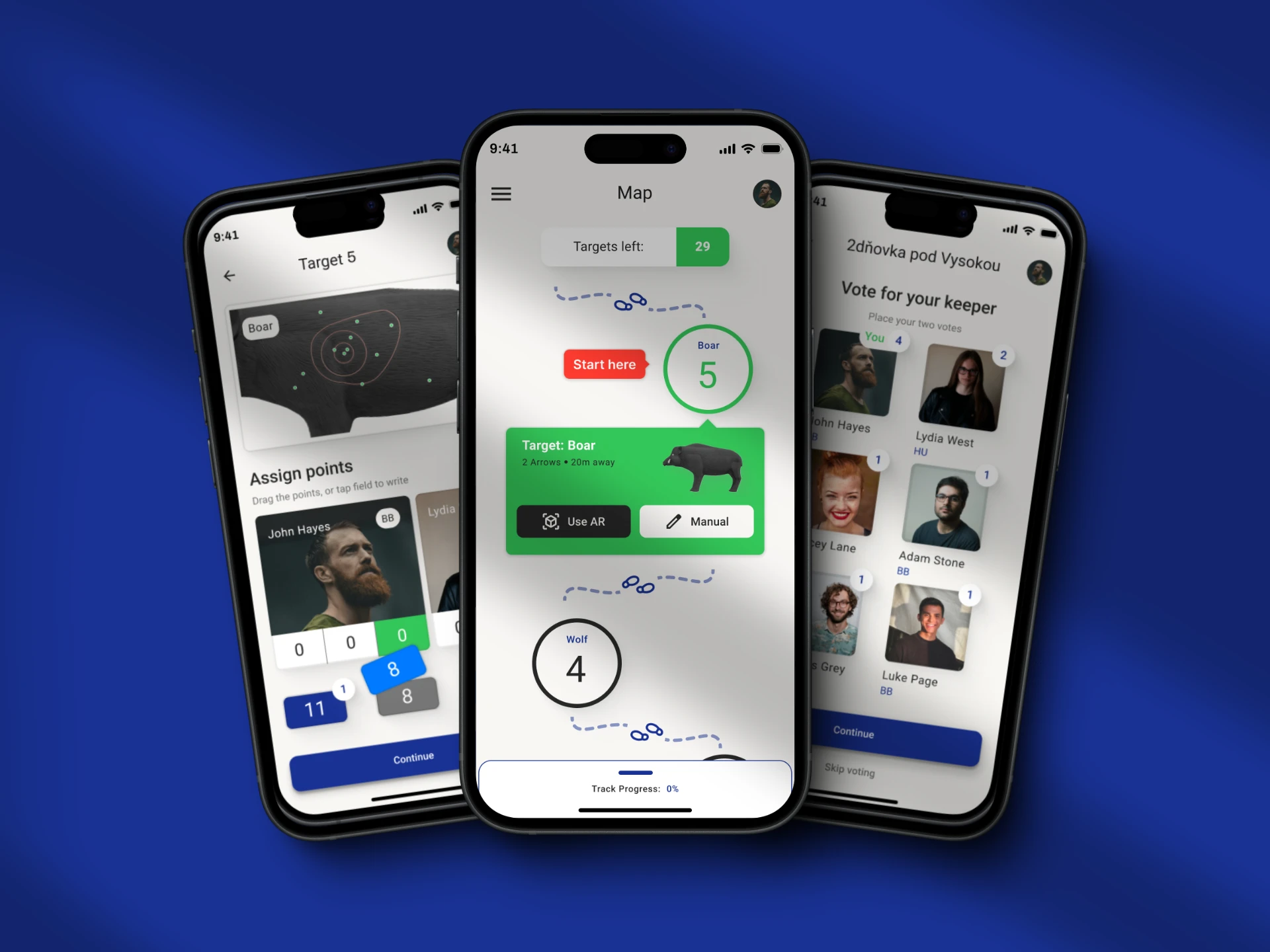
Transforming a fragmented, paper-based scoring process into a resilient digital tool for the 3D archery community. My goal was to eliminate administrative stress during competitions while ensuring high readability in unpredictable outdoor conditions.
Transforming a fragmented, paper-based scoring process into a resilient digital tool for the 3D archery community. My goal was to eliminate administrative stress during competitions while ensuring high readability in unpredictable outdoor conditions.
I’ve spent countless hours on archery ranges, and I’ve seen firsthand how a simple paper scorecard can break an archer’s focus. Waypoints started as my own need for a better tool, but it quickly became a challenge to design for a community I care about. This project is my attempt to replace the ‘old way’ with a digital experience that feels as natural and focused as the sport itself.
I’ve spent countless hours on archery ranges, and I’ve seen firsthand how a simple paper scorecard can break an archer’s focus. Waypoints started as my own need for a better tool, but it quickly became a challenge to design for a community I care about. This project is my attempt to replace the ‘old way’ with a digital experience that feels as natural and focused as the sport itself.
Note: If you’d prefer to see the case study in a different format, a slide deck version is available.
Strategy
Core Objectives

Accelerate evaluation
Accelerate evaluation
Digital entry at the user level eliminates hours of manual post-competition sorting for organizers.
Digital entry at the user level eliminates hours of manual post-competition sorting for organizers.
Ergonomic Flexibility
Ergonomic Flexibility
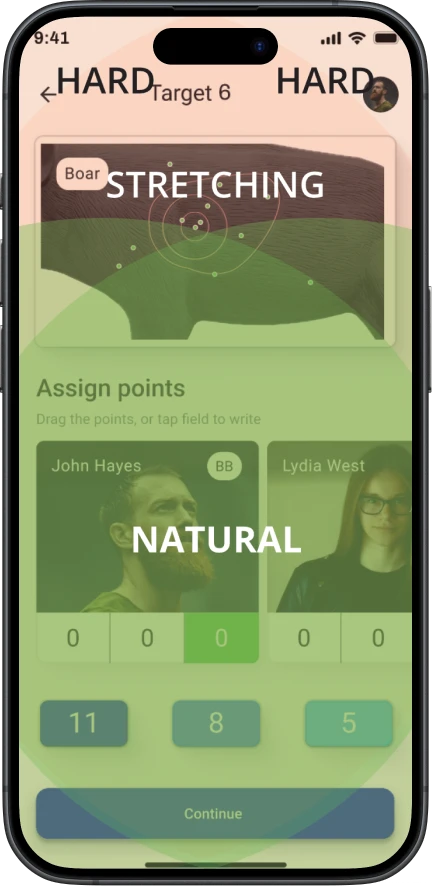
One-handed operation is a necessity, not a feature. Every primary action must stay within the thumb’s natural reach.
One-handed operation is a necessity, not a feature. Every primary action must stay within the thumb’s natural reach.
Universal Readability
Universal Readability
Archery is multigenerational. The UI must be high-contrast and intuitive for both 16 and 60-year-olds.
Archery is multigenerational. The UI must be high-contrast and intuitive for both 16 and 60-year-olds.
Development
When Minimalism Obstructs Function
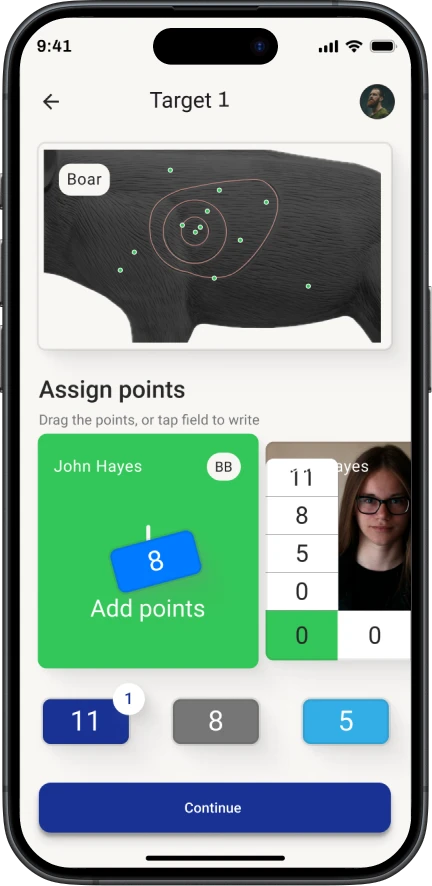
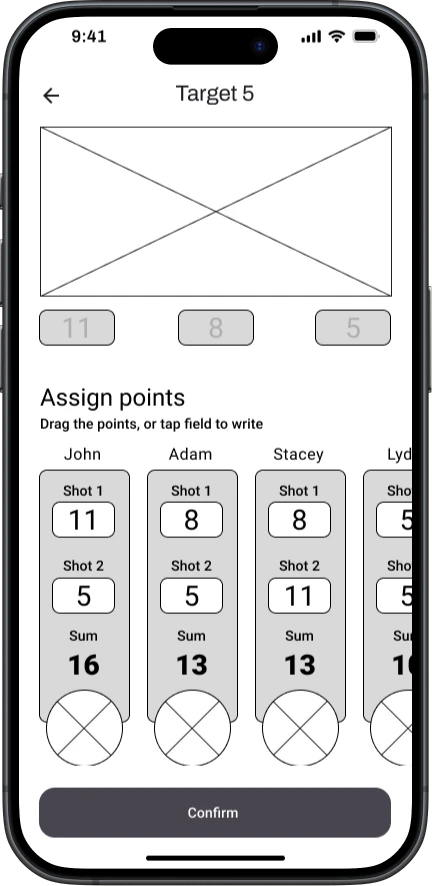
My initial design was driven by minimalism. I tried to condense every score-entry element into a single, compact screen. Testing quickly proved this was a failure. The lack of visual hierarchy made the interface unusable under stress of a competition. I had to pivot, giving the interface 'room to breathe' and prioritizing cognitive clarity over aesthetic density.
My initial design was driven by minimalism. I tried to condense every score-entry element into a single, compact screen. Testing quickly proved this was a failure. The lack of visual hierarchy made the interface unusable under stress of a competition. I had to pivot, giving the interface 'room to breathe' and prioritizing cognitive clarity over aesthetic density.
My initial design was driven by minimalism. I tried to condense every score-entry element into a single, compact screen. Testing quickly proved this was a failure. The lack of visual hierarchy made the interface unusable under stress of a competition. I had to pivot, giving the interface 'room to breathe' and prioritizing cognitive clarity over aesthetic density.
I always feel a bit guilty when I write the wrong score. Even if I fix it, it throws me off. It’s never just about the arrow—it's about the pressure and who's watching.
I always feel a bit guilty when I write the wrong score. Even if I fix it, it throws me off. It’s never just about the arrow—it's about the pressure and who's watching.
Mike (Pseudonym), active 3D archer & usability test participant
Challenge 1
The Ergonomic Tug-of-War (User Perspective)
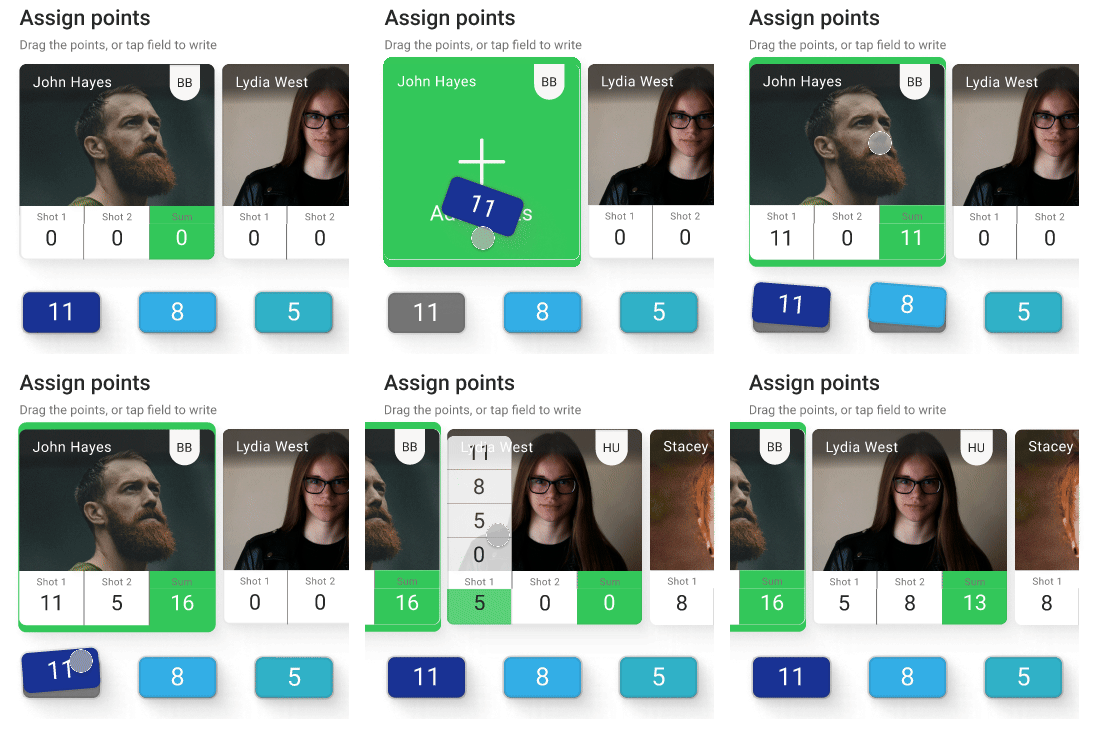
My goal was to offer a choice: a gestural 'drag-and-drop' for speed, and a conservative 'drop-up' menu for maximum reliability under stress. Testing revealed that while the 'pills' felt innovative, under pressure (or in the rain), users reverted to the safety of the menu. I decided to keep both to accommodate different levels of digital literacy and environmental conditions.
Challenge 2
The Architectural Iteration (Designer’s Perspective)
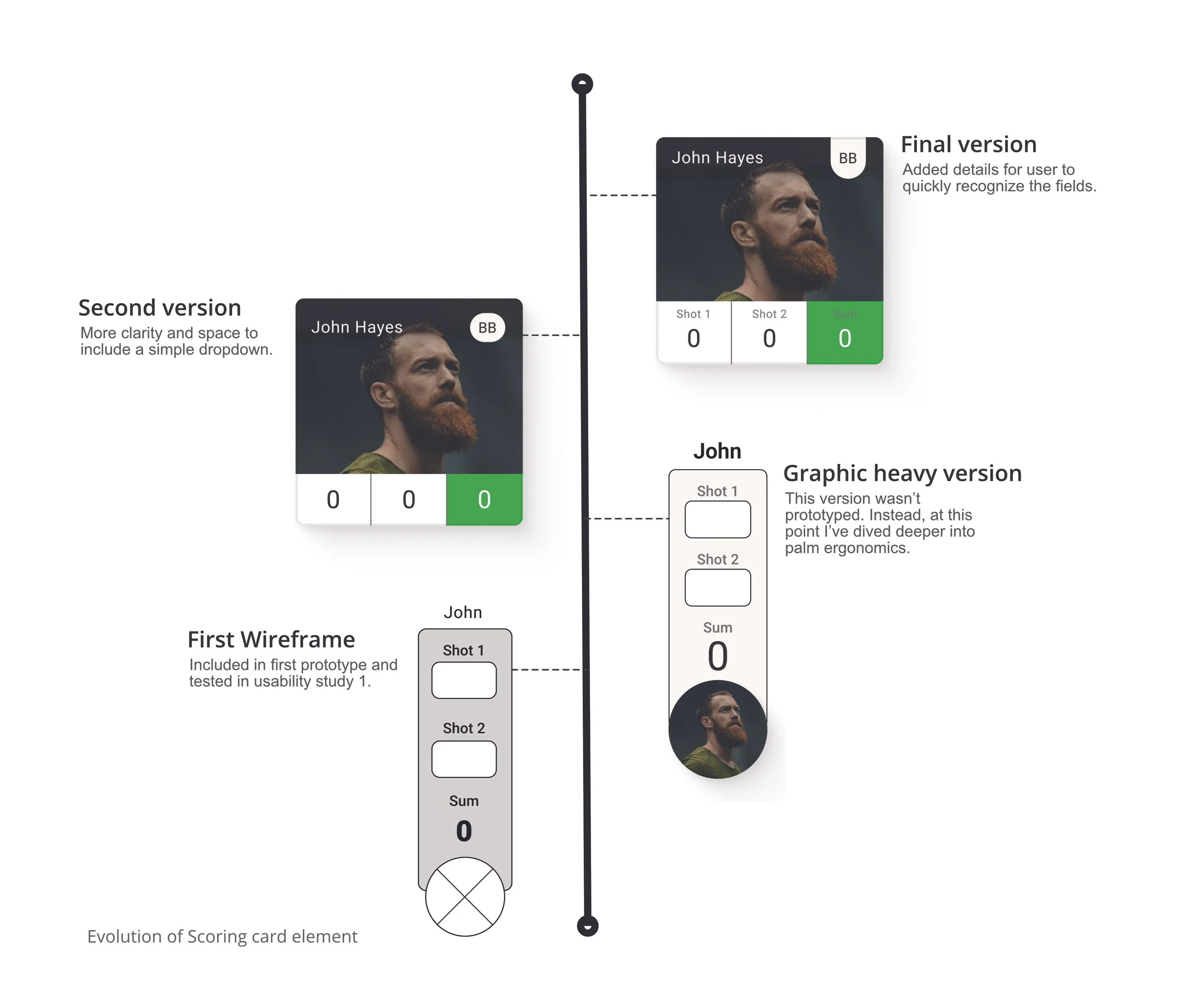
To validate two competing input methods, I had to move beyond simple frames. I designed a modular 'Scoring Card' component with multiple states and nested interaction layers. This allowed me to switch between the 'Drag' and 'Tap' systems during usability tests without rebuilding the prototype, ensuring that my data was based on a consistent user flow rather than fragmented experiments.
To validate two competing input methods, I had to move beyond simple frames. I designed a modular 'Scoring Card' component with multiple states and nested interaction layers. This allowed me to switch between the 'Drag' and 'Tap' systems during usability tests without rebuilding the prototype, ensuring that my data was based on a consistent user flow rather than fragmented experiments.

Hands-on
Experience the prototype
The final prototype focuses on the high-stress window of a competition—from joining a group to recording the final arrow. It was built to validate if a digital tool can maintain the pace of a live event without becoming a distraction.
The final prototype focuses on the high-stress window of a competition—from joining a group to recording the final arrow. It was built to validate if a digital tool can maintain the pace of a live event without becoming a distraction.
The Entry Ritual
The Entry Ritual
Mirroring the real-world start of a competition. Join a group, assign roles, and step onto the field with zero friction.
Mirroring the real-world start of a competition. Join a group, assign roles, and step onto the field with zero friction.
Dual-Input Validation
Dual-Input Validation
Test the 'pill-drag' vs. 'drop-up' menu directly on the first archer’s card. Experience how different ergonomics impact speed and confidence.
Test the 'pill-drag' vs. 'drop-up' menu directly on the first archer’s card. Experience how different ergonomics impact speed and confidence.
Training Easter Egg
Training Easter Egg
A post-testing addition. A hidden 'Training Mode' feature born from a deep dive during usability study nr.2, exploring life beyond the tournament.
A post-testing addition. A hidden 'Training Mode' feature born from a deep dive during usability study nr.2, exploring life beyond the tournament.
Lessons Learned
Designing for Real-world Impact
This project was my masterclass in user empathy. I learned that what users say in a controlled environment often differs from how they act under pressure. My biggest takeaway was learning to filter my own bias as an archer and focusing on the psychological 'weight' of the interface—ensuring that every interaction builds trust, not anxiety.
This project was my masterclass in user empathy. I learned that what users say in a controlled environment often differs from how they act under pressure. My biggest takeaway was learning to filter my own bias as an archer and focusing on the psychological 'weight' of the interface—ensuring that every interaction builds trust, not anxiety.
I decided to take Waypoints beyond Figma by offering the solution to the Slovak 3D Archery Association. While the outreach didn't result in an immediate partnership or feedback, it was a vital step in understanding the 'Business of Design.' It taught me that a great product needs more than just good UX—it needs institutional readiness and a strategic bridge between innovation and tradition.
I decided to take Waypoints beyond Figma by offering the solution to the Slovak 3D Archery Association. While the outreach didn't result in an immediate partnership or feedback, it was a vital step in understanding the 'Business of Design.' It taught me that a great product needs more than just good UX—it needs institutional readiness and a strategic bridge between innovation and tradition.
Future Vision
Possible Next Strategic Step
My journey with Waypoints most likely doesn't end with a Figma file. With the rise of AI-assisted development and 'vibecoding,' the barrier between a high-fidelity prototype and a functional community tool has vanished. I am now exploring how to turn this logic into a live application.
My journey with Waypoints most likely doesn't end with a Figma file. With the rise of AI-assisted development and 'vibecoding,' the barrier between a high-fidelity prototype and a functional community tool has vanished. I am now exploring how to turn this logic into a live application.
To fully digitize the sport, the focus must shift from the archer to the organizer. The next phase involves designing a comprehensive Tournament Management System—a backend dashboard that handles registration, live scoring feeds, and automated results. Only by closing the loop between the field and the judge’s table can Waypoints become the industry standard I envisioned when I first reached out to the Slovak 3D Archery Association.
To fully digitize the sport, the focus must shift from the archer to the organizer. The next phase involves designing a comprehensive Tournament Management System—a backend dashboard that handles registration, live scoring feeds, and automated results. Only by closing the loop between the field and the judge’s table can Waypoints become the industry standard I envisioned when I first reached out to the Slovak 3D Archery Association.
Ready to scale your product?
Ready to scale your product?
From prototyping to production-ready design systems,
I bridge the gap between user needs and technical feasibility.
From prototyping to production-ready design systems,
I bridge the gap between user needs and technical feasibility.
From prototyping to production-ready design systems, I bridge the gap between user needs and technical feasibility.